
Westminster Abbey
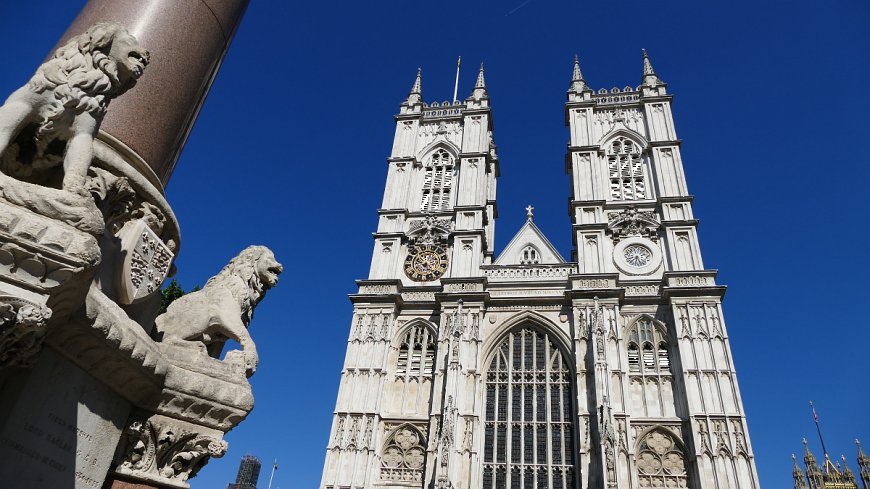
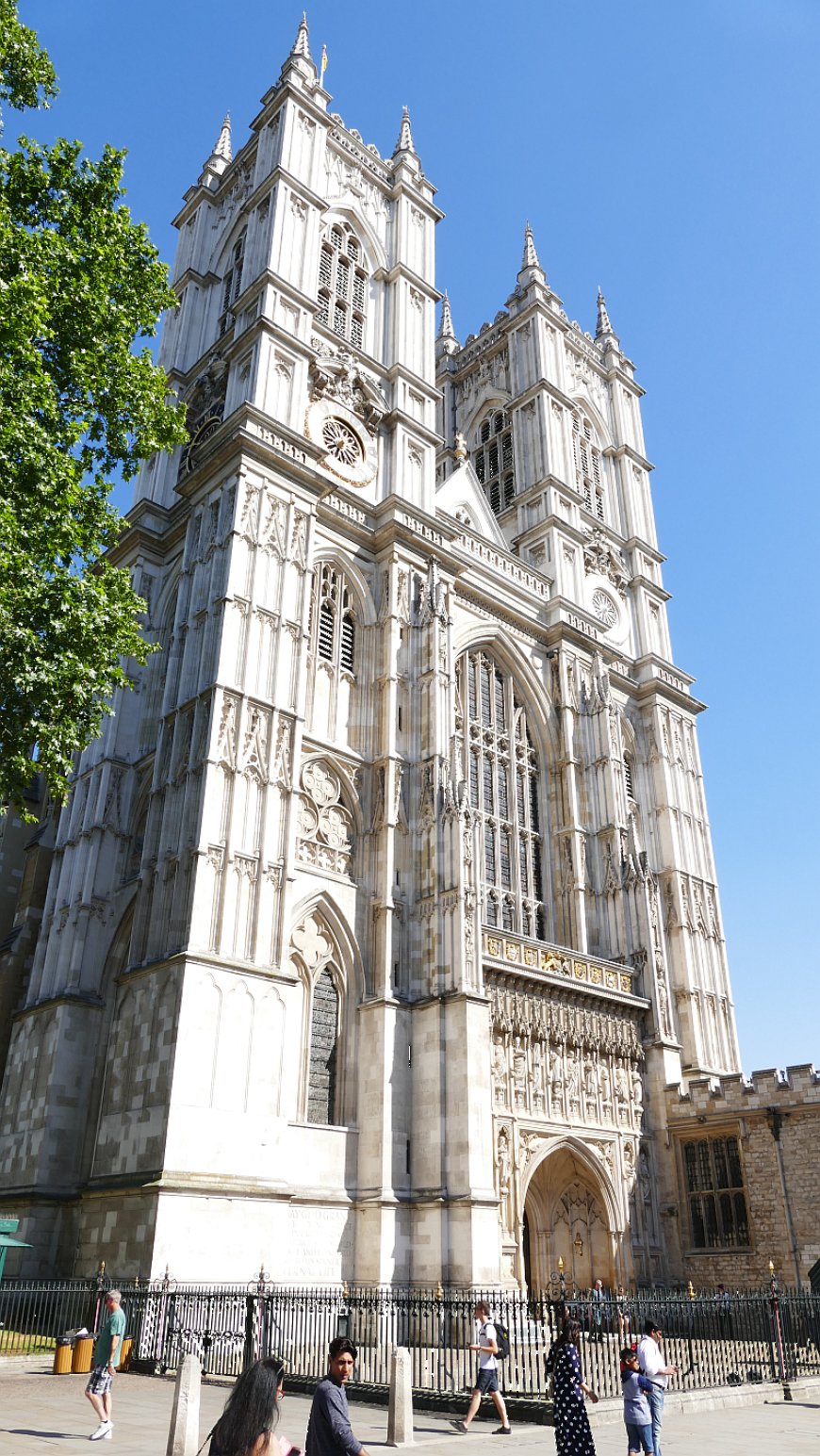
Westminster Abbey
Westminster Abbey is a large Gothic church in the city of Westminster, England, and is one of the country’s most important religious buildings. Legend has it that a group of Benedictine monks came to this site and established a tradition of daily worship during the times of Bishop Mellitus. However, Westminster Abbey truly came into the limelight in 1605 when Edward the Confessor set up his throne here, where he was eventually buried along with his wife. Construction of the present-day church began on the orders of King Henry III, who was also later buried here. The Westminster Abbey history runs wide and deep, as all coronations of British and English monarchs took place at the church, right from that of William the Conqueror. What is even more special about Westminster Abbey is that it is a ‘Royal Peculiar’, which means that, as neither an abbey nor a cathedral, it is responsible directly to the sovereign. This iconic monument is a landmark and a must-visit for all tourists in England.
Opening Hours
Monday to Friday - 9:30 AM to 3:30 PM | Saturday - 9 AM to 1 PM (9 AM - 3 PM between May-Aug)
P.S. please note that the site is closed on Sundays.
Know before you go
Best time to visit - The best time to visit the religious site is early morning, so you can visit the London Eye and the parliament buildings located right next to it.
Address
20 Deans Yd, London SW1P 3PA, United Kingdom Get there
Why Visit Westminster Abbey
Westminster Abbey is a very special landmark for several reasons – it is the burial site of over 3,300 significant contributors to world history. These include 17 monarchs, scientists, poets, historians, writers, and even dancers. Will and Kate walked down the aisle at this gorgeous wedding location, as did at least 15 other royal couples, including Queen Elizabeth II and Prince Edward. Other exclusive sights at Westminster include the Coronation Chair, created for King Edward I in 1296, and Poet’s Corner, the burial site of many famous poets and writers. With its exquisite stained glass and stunning Gothic architecture, and its location next to popular London tourist destinations like Westminster Palace, there’s a very good reason Westminster Abbey is visited by over a million people every year!
Walk through 1,000 years of British history at Westminster Abbey. Visit monarchs’ tombs, stained glass chapels, and quiet cloisters at your own pace. Enjoy a free basic multimedia guide onsite that helps you navigate key chapels, royal tombs, and historic highlights without needing a live guide. Choose enhancements like priority Abbey entry, guided tour with a licensed English-speaking guide, walking tour of Big Ben and Buckingham Palace, printed guidebook, and AI audioguide app access.
Westminster Abbey: Architecture
The present-day church was built by King Henry III, supervised by masons Henry of Reyns, John of Gloucester, and Robert of Beverley. Influenced by the cathedrals at Reims, Amiens, and Chartres, the masons borrowed the ideas of an apse with radiating chapels. They also used characteristic Gothic features of pointed arches, awe-inspiring ribbed vaulted ceilings, 100-feet-long cloisters, and flying buttresses to design this astonishing structure. The Abbey also has the highest Gothic vault in England – nearly 102 feet!
The chapter house of Westminster Abbey, described as ‘a structure perfect in itself’ by Sir Giles Gilbert Scott (the last architect who worked on the structure in the 1870s), is adorned with beautiful stained glass, tiled medieval flooring, and fascinating wall paintings of angels in the heads of the arches. Though Westminster has undergone several renovations in recent times to allow its glorious structures to survive, the inherent beauty and enigma of this historical site has not diminished in the slightest. If anything, these additions and restorations have allowed it to retain its status as an architectural masterpiece.
Westminster Abbey Interiors
Westminster Abbey is one of the most iconic and impressive churches in London. Inside, its grand interiors are awe-inspiring and filled with centuries of history. The Gothic nave features decorative stained glass windows, intricately carved stone columns, and domed ceilings that reach up to 30 metres high.
There are also numerous monuments and memorials to British royalty and famous figures throughout the abbey. The Quire features a magnificent display of medieval wood carvings, while the Chapter House is renowned for its stunning vaulted ceilings and ancient murals.
Other notable interiors include the Chapel of St Mary Undercroft, which is one of the oldest parts of Westminster Abbey, and the Coronation Theatre, where British monarchs have been crowned since 1066. There is also the Shrine of St Edward the Confessor, which houses a holy relic to one of England's patron saints. These breathtaking interiors are sure to provide visitors with an awe-inspiring experience.
Westminster Abbey Burials - Who is Buried Here?
Westminster Abbey has long been a prominent site for burials of powerful and influential people throughout history. Founded in 960 AD, the abbey was home to royal coronations and many funerals of English monarchs, starting with Edward the Confessor in 1066. Royalty aside, Westminster Abbey also became known as a burial place for poets, politicians, scientists, and other notable figures. The abbey is home to the final resting places of Charles Darwin, Isaac Newton, Charles Dickens, and Geoffrey Chaucer. Other prominent individuals buried at Westminster Abbey include Oliver Cromwell, Lawrence Olivier, William Pitt the Elder, and Winston Churchill. The burial sites also feature memorials for famous figures who were cremated and their ashes scattered, such as John Lennon.
Top Things to See at Westminster Abbey
The Coronation Chair
Made by the order of King Edward I to enclose the mysterious sandstone Stone of Scone, this oaken chair adorned with patterns of foliage, birds, and animals has been used in coronation ceremonies since 1308. The Stone of Scone, according to legend, was the one upon which Jacob rested his head at Bethel. After being passed from country to country, it eventually ended up in Perthshire and has been an object of veneration to the Scots for centuries. Today, the stone can be viewed at Edinburgh Castle. The Coronation chair is viewed and visited by tourists around the world. It even has graffiti at the back, carved in by Westminster schoolboys and visitors in the 18th and 19th centuries.
Poets' Corner
Poets’ Corner is the name given to the south transept of Westminster Abbey, in honor of the number of poets, writers, and playwrights buried there. The first poet to be interred here was Geoffrey Chaucer, writer of The Canterbury Tales. Writers buried here include Charles Dickens, Thomas Hardy, and Alfred Tennyson, while those memorialized include Jane Austen, Emily Brontë, and Lewis Carroll. The latest poet to be commemorated at Westminster Abbey was Philip Larkin, on December 2, 2016.
Abbey Bells
While the Abbey initially constructed in 1065 by Edward the Confessor may have had bells, the first recorded information about the existence of these was found in 1230. Today, there are ten bells, which are generally rung at major church festivals, saints' days, Royal and Abbey anniversaries, civic events, and for special services.
Westminster Abbey Bells
The Westminster Abbey is an iconic landmark in London and its burial grounds are among some of the most important in Britain. The abbey has been the final resting place for many royals, famous literary figures, politicians, and many other influential people throughout history. Among those buried in the abbey include Queen Elizabeth I, Charles Dickens, Isaac Newton, and Geoffrey Chaucer.
Plan Your Visit
Westminster Abbey Opening Hours
Westminster Abbey is open from 9:30 AM to 3:30 PM, from Monday to Friday, and 9 AM to 1 PM (9 AM to 3 PM from May to August) every Saturday.
Getting to the Westminster Abbey
By Bus: 11, 24, 88, 148, and 211 pass the entrance. 3, 12, 53, 53X, 87, 88, 109, 159, and 453 stop close enough for you to walk to the Abbey.
By Tube: The nearest stations are St. James's Park (District and Circle lines) and Westminster (Circle, District, and Jubilee lines).
By Train: The nearest train stations are Victoria and Waterloo.
Best Time To Visit Westminster Abbey
While there is no perfect time to visit Westminster Abbey, it's an established fact that the crowds are least early in the morning. Ideally, it's also the best time to catch views in the early light of day.
Insider Tips for Visiting Westminster Abbey
- Since Westminster Abbey is located near the parliament buildings and the London Eye, be sure to arrive early, so that you can pay a visit to the surrounding attractions as well.
- The Abbey is not open to visitors on Sundays, but you can join a service instead, or view a concert or special organ recital.
- Comfortable shoes are recommended as much of the floor and steps of the Abbey are uneven.
- While there is no strictly enforced dress code, please note that the Abbey is a place of worship, and it is better to be dressed modestly.
- It is recommended that people using wheelchairs enter through the North Door.
- Guide dogs are allowed at the Abbey.
- Unfortunately, photography and videography are not allowed inside the Abbey.